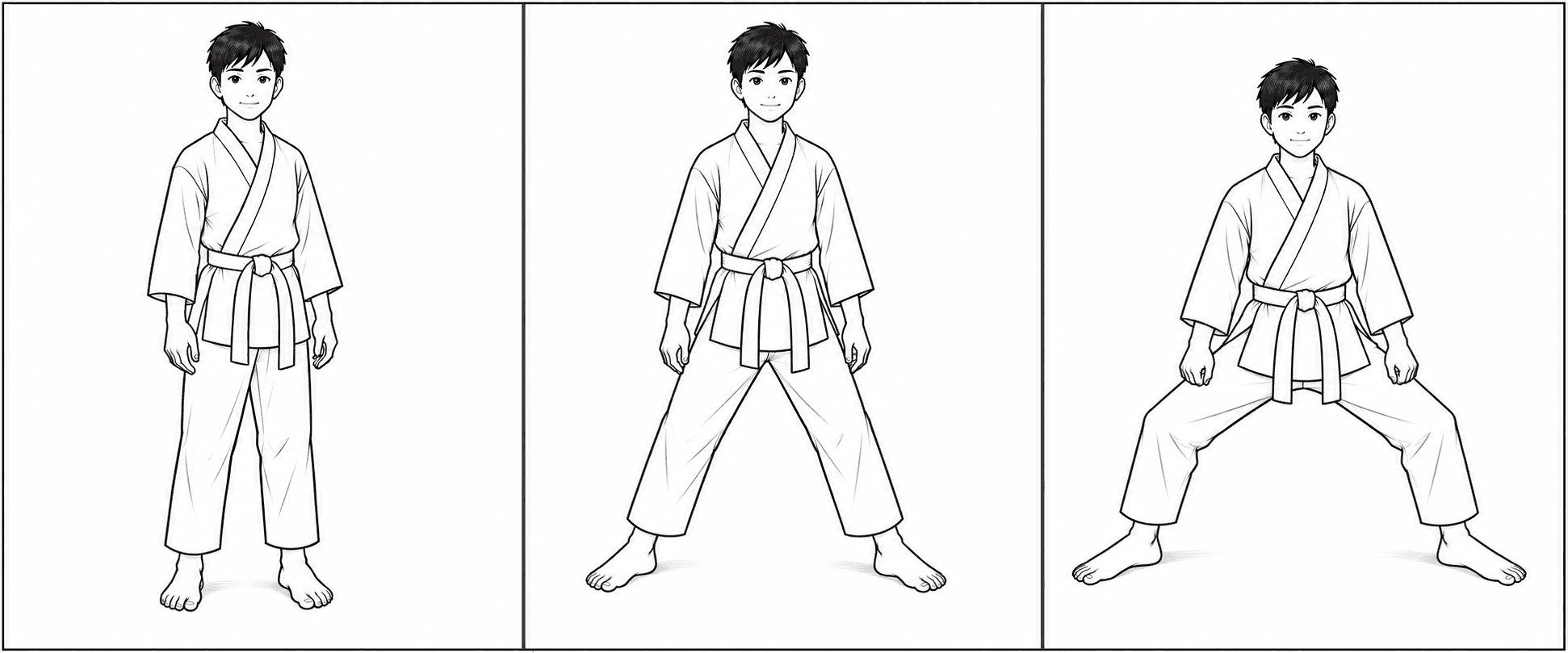
Karate stances
Stances are the balanced positions karateka use while practising movement and technique. These beginner references introduce five common examples; they are a starting point for learning with an instructor, not a grading checklist.
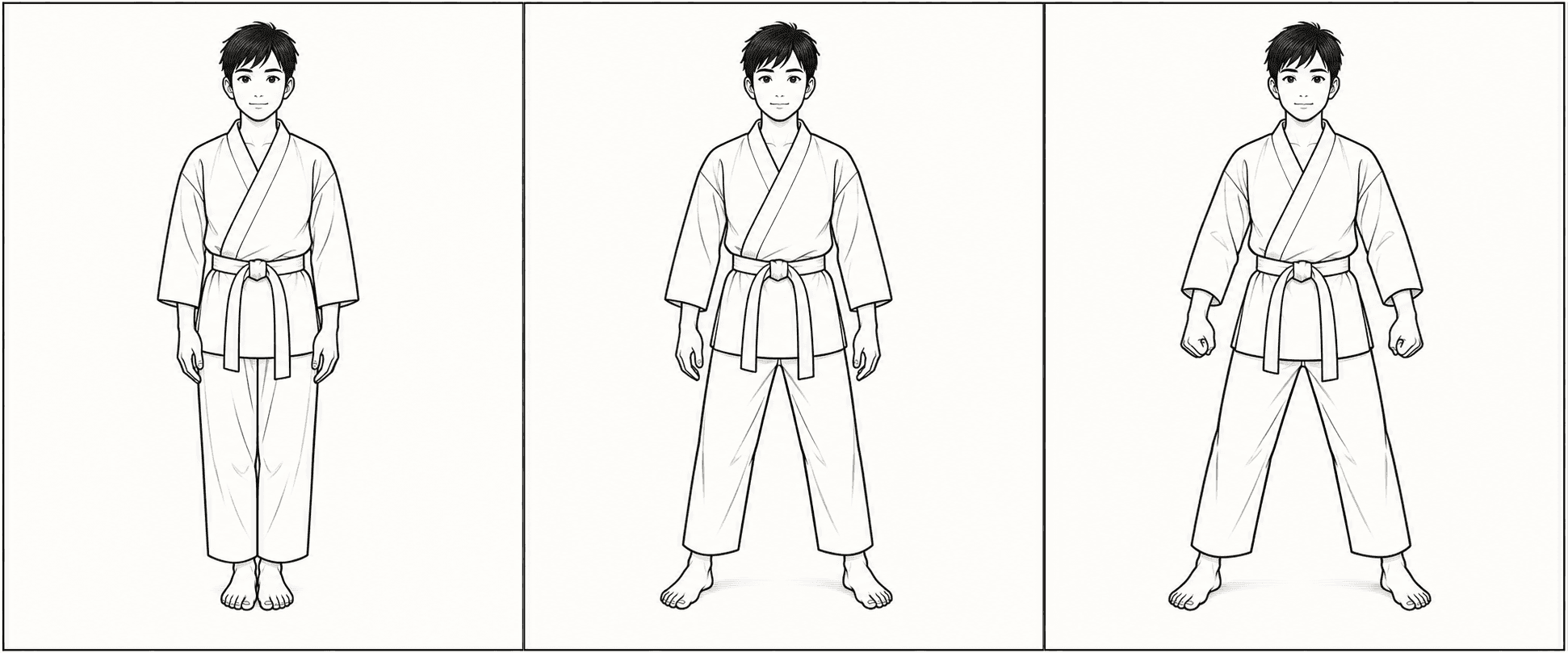
Hachiji-dachi
Natural / ready stance
A comfortable, balanced standing position used to prepare for movement or begin basic practice.
This entry follows the JKA manual’s Hachiji-dachi example; other organisations may use a different ready position.
How to set up
- Stand tall and let your arms rest naturally by your sides.
- Place your feet comfortably apart, with the toes turned only as your instructor teaches.
- Soften your knees and settle your weight evenly so you can move in any direction.
Safety cue: Use the foot direction taught at your dojo and keep your balance comfortable and steady.
Source: Japan Karate Association (JKA) instructor technical manual
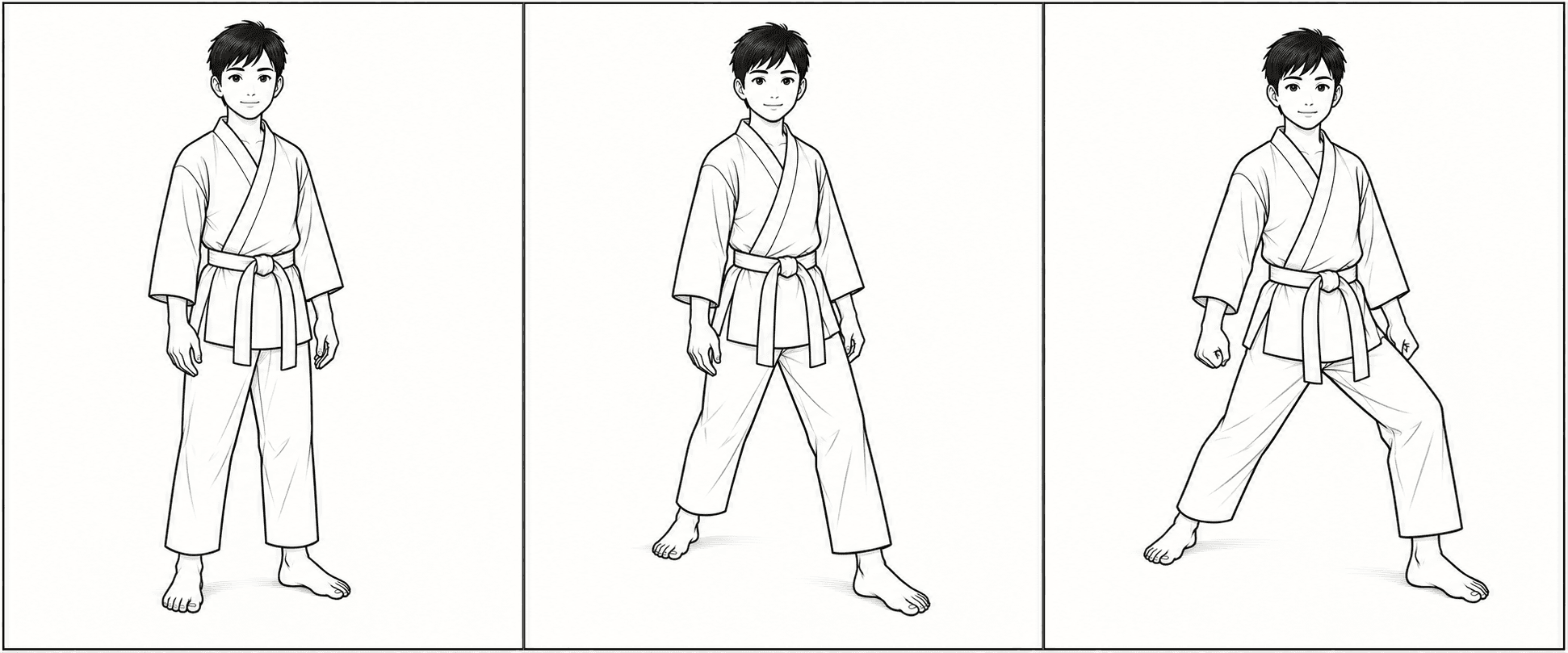
Zenkutsu-dachi
Front stance
A forward-facing stance with one foot in front of the other, used in basic movement and technique practice.
This entry follows the JKA teaching example; other styles may adjust the stance and its movement.
How to set up
- Begin from a comfortable ready position and choose which foot will move forward.
- Step that foot forward while keeping your feet on separate, stable tracks.
- Settle into a balanced position with the front knee comfortably bent and your torso upright.
Safety cue: The JKA manual asks that the bent knee follow the direction of the toes; use the depth your instructor teaches.
Source: Japan Karate Association (JKA) instructor technical manual
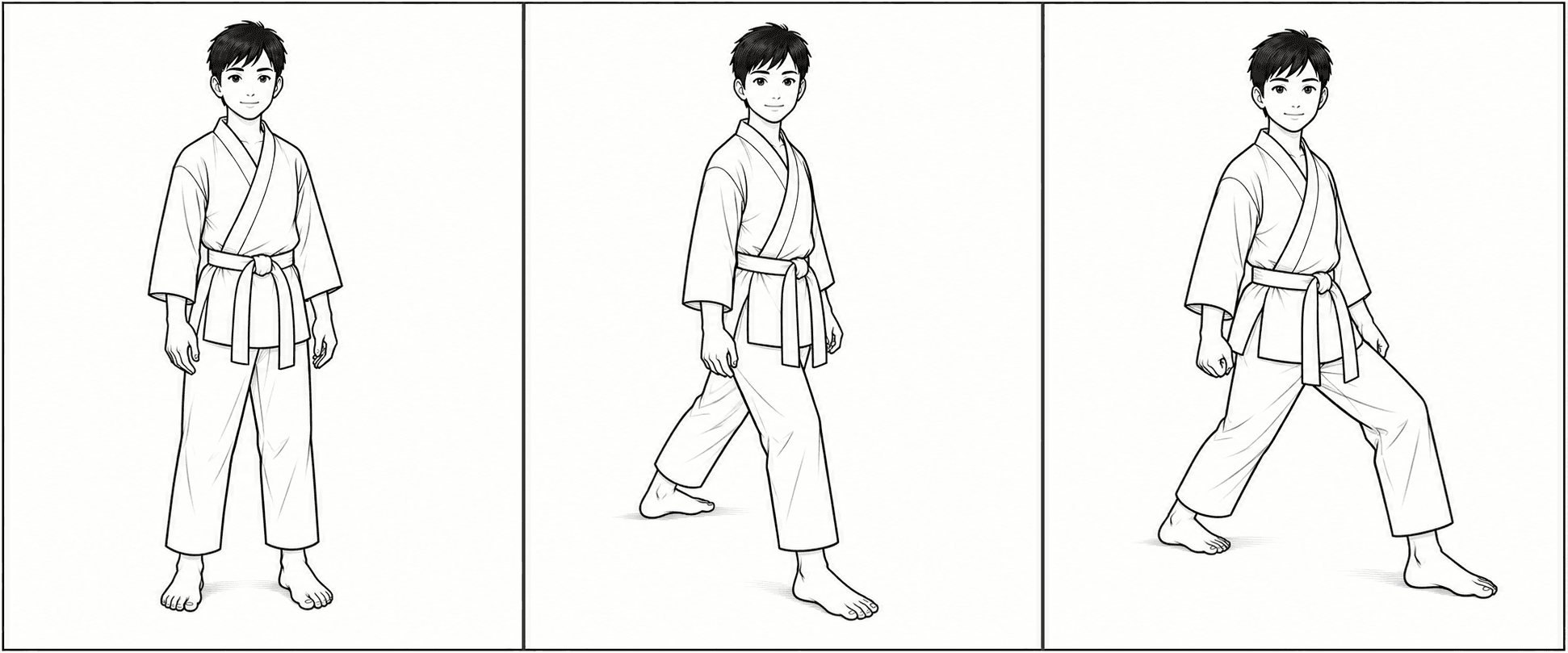
Kokutsu-dachi
Back stance
A stance with the feet offset and the body arranged to face partly to the side, as taught in the practitioner’s style.
This entry follows the JKA form; the exact shape and weight distribution are syllabus-specific.
How to set up
- Start from a balanced ready position and turn your body as your instructor demonstrates.
- Move one foot back to create a stable, offset base rather than placing your feet on one narrow line.
- Settle with both knees soft, your posture upright, and your balance centred over your base.
Safety cue: Keep the bent knee aligned with the direction of the toes, and ask your instructor to check your form.
Source: Japan Karate Association (JKA) instructor technical manual
Kiba-dachi
Horse stance
A broad, straddled stance called Kiba-dachi in the JKA manual; exact foot position and depth depend on the syllabus.
This entry follows the JKA manual’s Kiba-dachi example; foot direction and depth vary by style.
How to set up
- Begin upright and step your feet apart into a comfortable wide base.
- Turn your feet in the direction shown by your instructor and keep them grounded.
- Bend your knees a little while keeping your torso upright and your weight balanced.
Safety cue: The JKA manual asks that bent knees follow the direction of the toes; use the depth your instructor teaches.
Source: Japan Karate Association (JKA) instructor technical manual
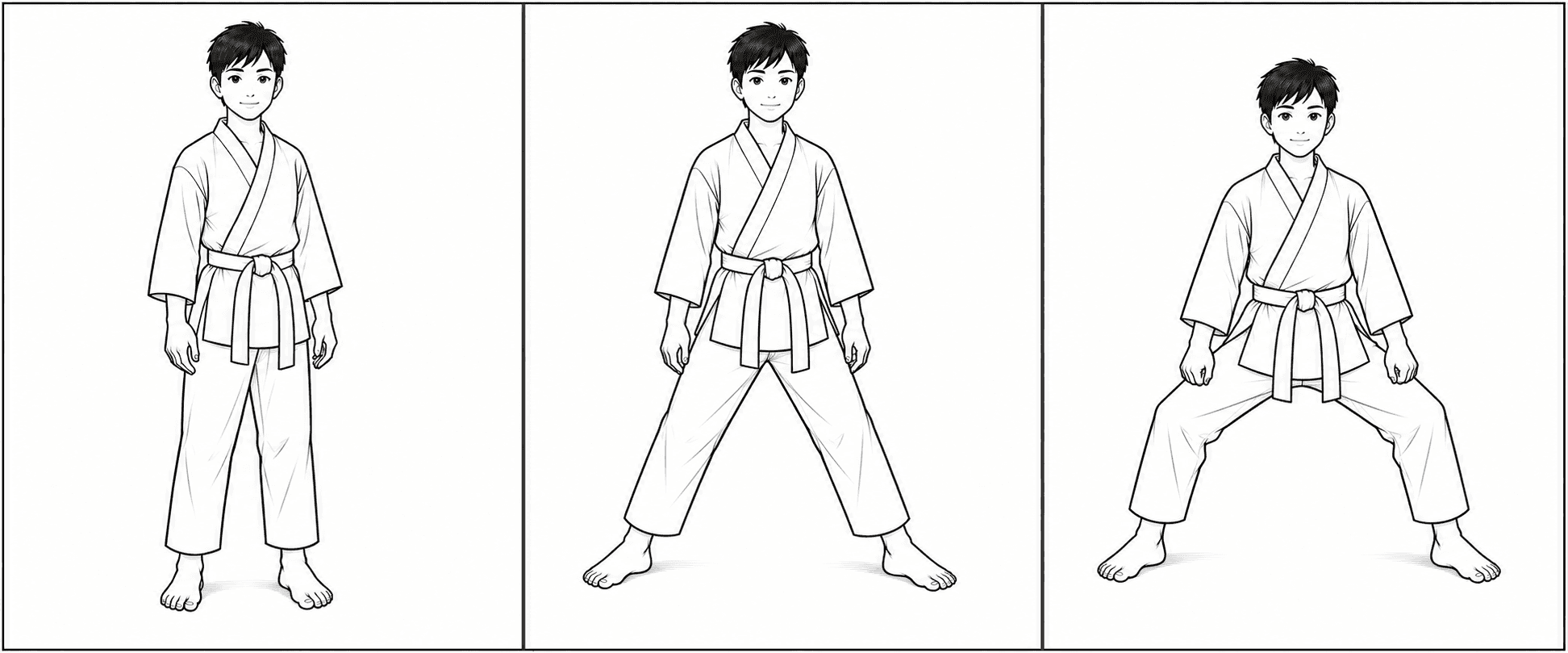
Shiko-dachi
Straddle stance
A broad stance with the feet turned outward, used in some karate styles and training syllabuses.
The JKA manual lists Shiko-dachi as an outward-facing straddling stance; its exact form and depth are style-specific.
How to set up
- Stand upright and step your feet apart into a broad but comfortable base.
- Turn your toes outward only as far as your instructor has shown you.
- Bend your knees gently in the same general direction as your toes and keep your chest lifted.
Safety cue: Follow your instructor’s version and keep the knees moving in the direction of the toes.
Source: Japan Karate Association (JKA) instructor technical manual