Knowledge Share
How to practise karate safely at home
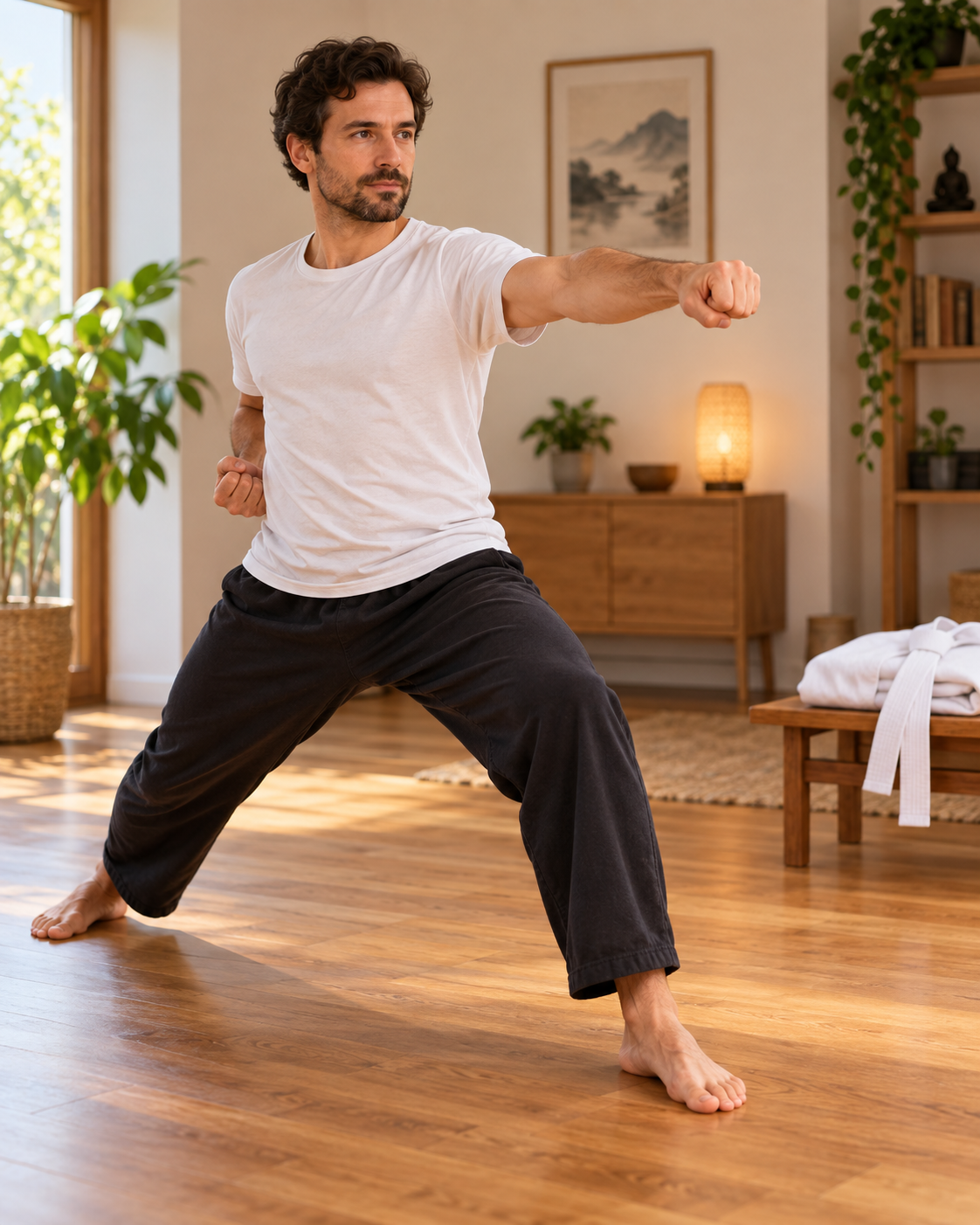
Audience: beginners, parents and students revising techniques between supervised classes.
Quick answer
Home practice should reinforce movements your instructor has already taught. Clear a safe space, warm up gently, keep the work controlled and stop if you feel pain. Do not practise sparring or contact drills with another person at home unless a qualified instructor is present.
1. Clear the space
Move furniture, loose rugs, pets and breakable objects away from the practice area. Check the floor, ceiling height and nearby doors. Bare feet or the footwear your instructor recommends should have enough grip without catching on the surface.
2. Warm up gently
Start with light movement and the mobility exercises your instructor has shown you. Home practice is not a test of flexibility. Use a gradual pace and avoid bouncing or forcing a joint into a range you have not been taught.
3. Repeat only taught basics
Choose one or two techniques, stances, footwork patterns or kata sections from your current lessons. Slow, accurate repetitions are more useful than trying to learn an advanced movement from a random video. If you cannot remember a detail, make a note and ask at the next class.
4. Keep contact out of home practice
Do not punch, kick, block or grapple with a family member as a casual drill. Distance and impact are difficult to judge without coaching, and protective equipment does not replace supervision. Solo shadow practice can still rehearse posture, balance and timing without contact.
5. Stop when something feels wrong
Pain, dizziness, unusual breathlessness or loss of control are reasons to stop. Rest, tell a parent or training partner if relevant, and speak with your instructor before returning to that movement. This guide is general information, not diagnosis or treatment advice.
A simple ten-minute routine
- Two minutes of easy movement and breathing.
- Three minutes repeating one taught stance and basic technique slowly.
- Three minutes rehearsing a familiar kata section or footwork pattern.
- One minute of relaxed mobility.
- One minute writing down a question for your instructor.
When to check the instructor
Ask before practising if you are recovering from an injury, have an access need, are unsure about a technique, or want to add weights, impact pads, resistance bands or partner work. Your instructor can adapt the practice to your age, grade and organisation.
Sources
Last checked: 23 September 2026.