Knowledge Share
Karate basics: kihon, kata, kumite and dojo etiquette
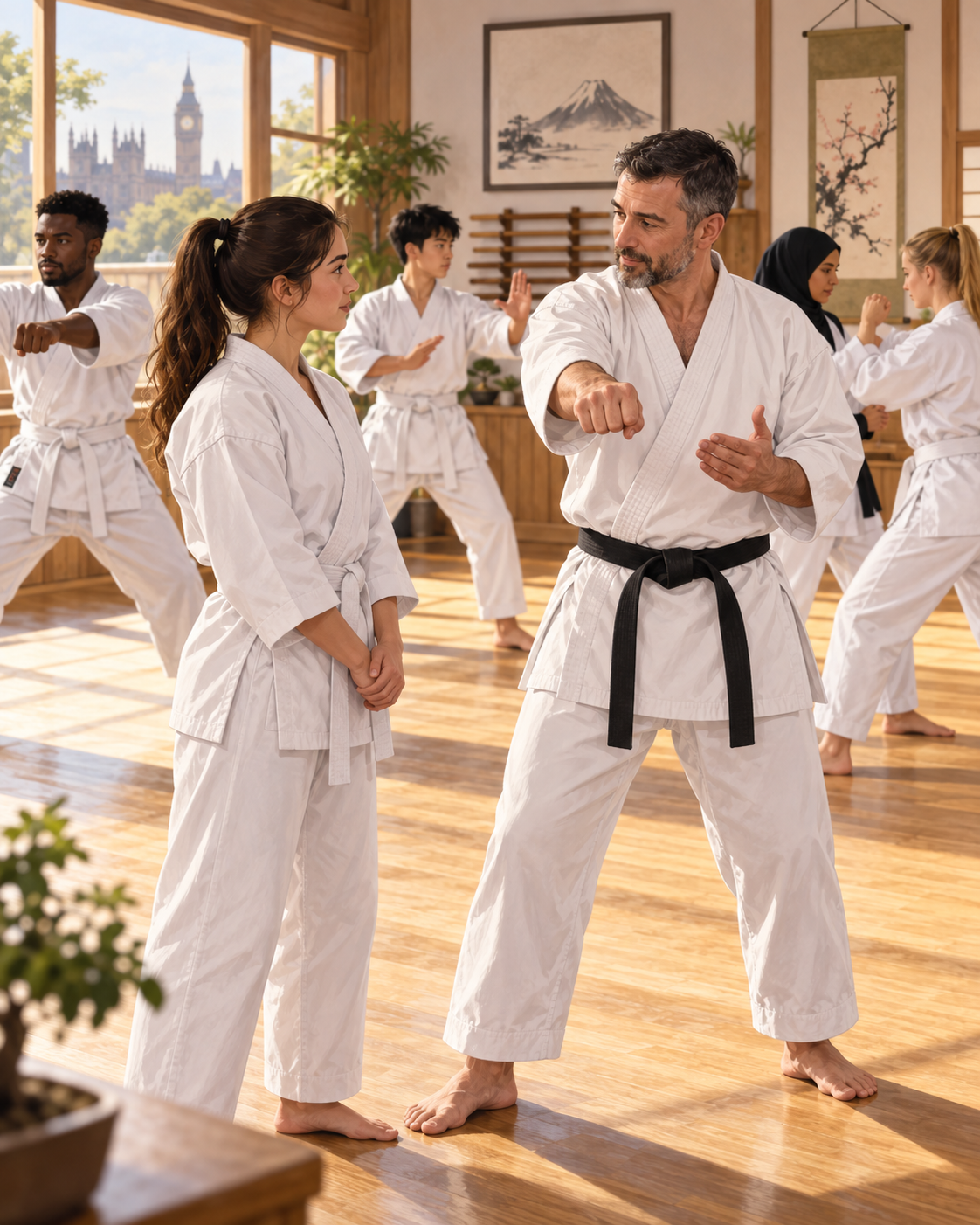
Audience: beginners, parents and anyone joining a karate class for the first time.
Quick answer
Kihon means basic techniques, kata is a pre-arranged sequence, and kumite is partner practice. Rei is a bow used to show respect, while dojo means the place where karate is practised. Clubs may use slightly different terminology or etiquette, so your instructor’s explanation always takes priority.
Kihon: the building blocks
Kihon covers the fundamental movements used in training, such as stances, punches, strikes, blocks and kicks. Beginners usually repeat these actions to learn balance, posture, coordination and control. The aim is not to hit hard in every practice; it is to learn the movement safely and accurately.
Kata: a set sequence
Kata is a pre-arranged sequence of techniques performed on your own. It combines direction, timing, posture and breathing. Different styles and organisations teach different kata, and the same name can sometimes be taught with variations. Follow the version your club demonstrates rather than trying to learn from an unrelated video.
Kumite: partner practice
Kumite means partner practice. In a beginner class it may involve controlled drills, distance work, attack-and-defence exercises or supervised sparring. The English Karate Federation describes sport kumite as simulated competition under rules, but clubs may adapt activities for age, grade and experience. Never add contact or intensity without the instructor’s direction.
Rei and dojo etiquette
Rei means bow. A bow can mark respect for the instructor, training partners and the practice space. Your club may also ask students to line up, wait for commands, keep the training area tidy and avoid jewellery or unsafe kit. These customs are not identical everywhere; observe the class and ask if you are unsure.
Words you may hear next
- Sensei — a respectful term for an instructor in many karate organisations.
- Mokuso — a brief quiet moment used by some clubs at the start or end of training.
- Yoi — a command meaning ready in some teaching systems.
- Hajime — a command meaning start in some teaching systems.
A beginner’s etiquette checklist
- Arrive in time to change and tell the instructor about any injury or access need.
- Wear the clothing and protective equipment the club has asked for.
- Listen for the command to start, stop or change partner.
- Keep contact controlled and stop when your partner or instructor asks.
- Ask before copying terminology, grading rules or etiquette from another style.
Safety note
Terminology, grading requirements and contact rules vary by organisation. This guide is general information, not a substitute for instruction. Stop if a movement causes pain and speak with the instructor before continuing.
When to check with your instructor
Ask before training if you are unsure about a command, a partner drill, permitted contact, protective equipment, a physical adaptation or what to do if you feel unwell.
Sources
Last checked: 21 September 2026.