Knowledge Share
Kata or kumite? Understanding the two sides of karate
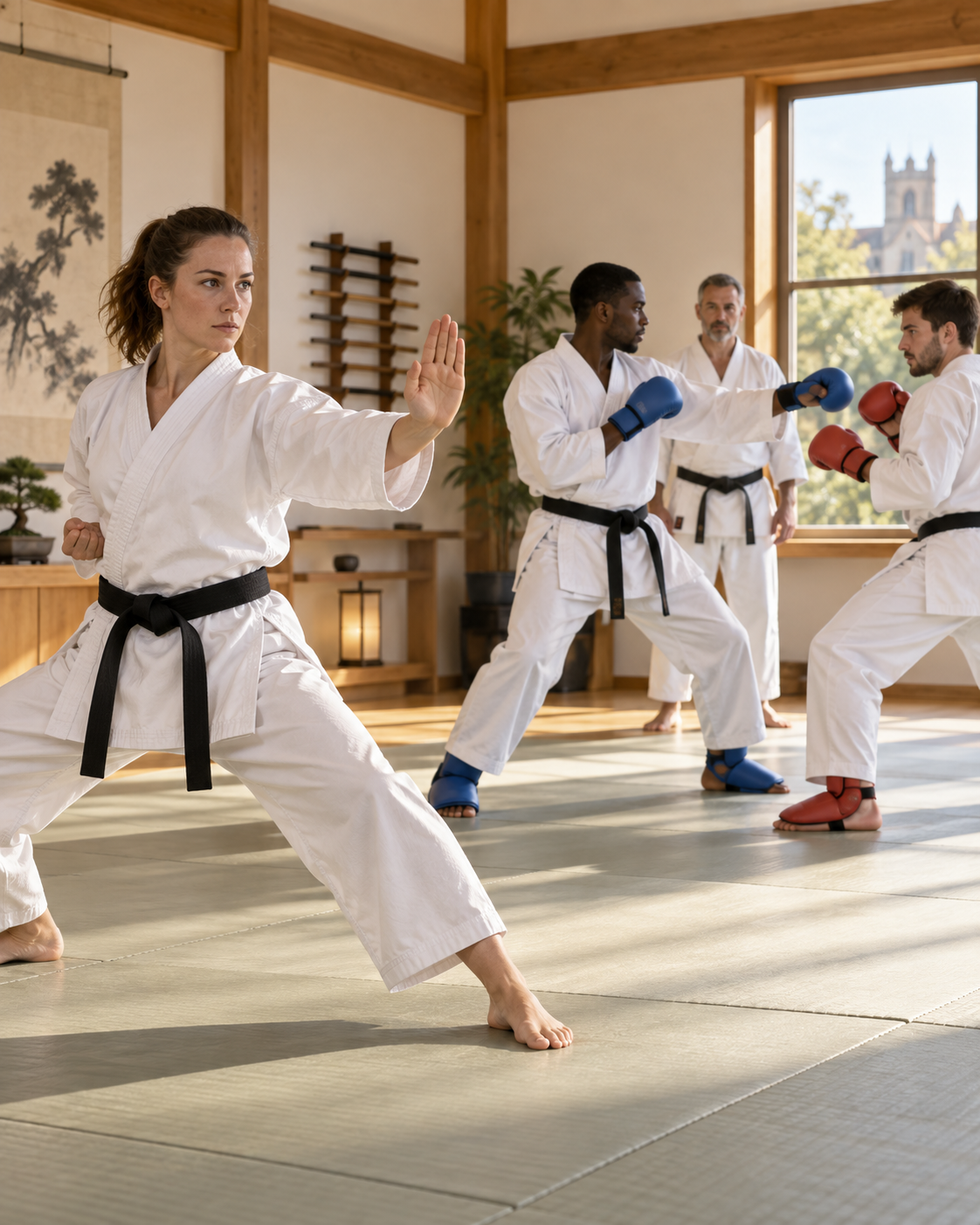
Audience: beginners and parents trying to understand class language, grading content or competition formats.
Quick answer
Kata is a solo, pre-arranged sequence of techniques. Kumite is partner practice, which can range from controlled drills in a class to rules-based sport competition. Both use the same foundations—posture, technique, timing and control—but the training task is different.
What kata asks you to practise
Kata links techniques into a set sequence performed in particular directions and rhythms. Students work on stance, balance, posture, breathing, focus and the quality of each movement. In competition, judges may assess technical performance and athletic expression under the rules of that event.
What kumite asks you to practise
Kumite involves a partner. Beginners may work on distance, movement, target awareness and agreed attack-and-defence drills. Sport kumite is simulated fighting under rules; the English Karate Federation notes that rules can be adapted for different levels and safety needs.
Why control matters
Kata can look powerful without contact. Kumite requires restraint as well as reaction: students must follow the drill, respect the partner and stop when the instructor calls. Protective equipment and competition rules do not make unsupervised contact safe.
How grading can use both
Some organisations include kihon, kata and kumite in gradings, while others set different requirements. Belt colours, kata names, waiting periods and pass standards are not universal across the UK. Use your own club’s syllabus rather than comparing a student with a different association.
For parents watching a class
- Look for clear instructions before partner work begins.
- Notice whether students are matched sensibly for age, size and experience.
- Check that contact is controlled and that students can stop immediately.
- Ask the instructor which parts of training are suitable to repeat at home.
When to check the organiser or instructor
Ask before a grading or competition if you are unsure which kata is required, whether kumite is compulsory, what protective equipment is approved, how categories are organised or what adaptations are available.
Sources
Last checked: 23 September 2026.