Knowledge Share
How to prepare for your child’s first karate grading
Quick answer
Your child does not need to learn a grading in one night. The best preparation is regular attendance, a clear idea of the syllabus from their own instructor, a tidy uniform, and enough sleep before the assessment. Karate organisations set their own grading rules, so treat any belt order, waiting period or licence requirement as organisation-specific rather than a UK-wide standard.
Ask what this grading covers
Start with the instructor’s syllabus. A grading can include kihon, which means basic techniques, kata, a set sequence of movements, and kumite, or partner work. The KUGB syllabus, for example, says an examiner may ask for some or all of the listed material and may revisit techniques from earlier gradings. Other organisations may use different names, belt colours or requirements.
Ask your instructor which techniques your child should practise, whether the assessment includes partner work, and whether there is anything they should not attempt without supervision. A short written checklist is often more useful than a long practice session at home.
Keep training ordinary
The week before a grading is a poor time to double the workload. Encourage your child to attend their normal classes and practise only the movements their instructor has already taught. Ten calm minutes of repetition can be enough for a younger student. Stop if a movement causes pain, and speak to the instructor about any injury or physical restriction.
KUGB guidance says students need permission from their senior club instructor and, within that organisation, normally train twice a week before grading. That is a KUGB rule, not a requirement for every club in Britain.
Prepare the kit
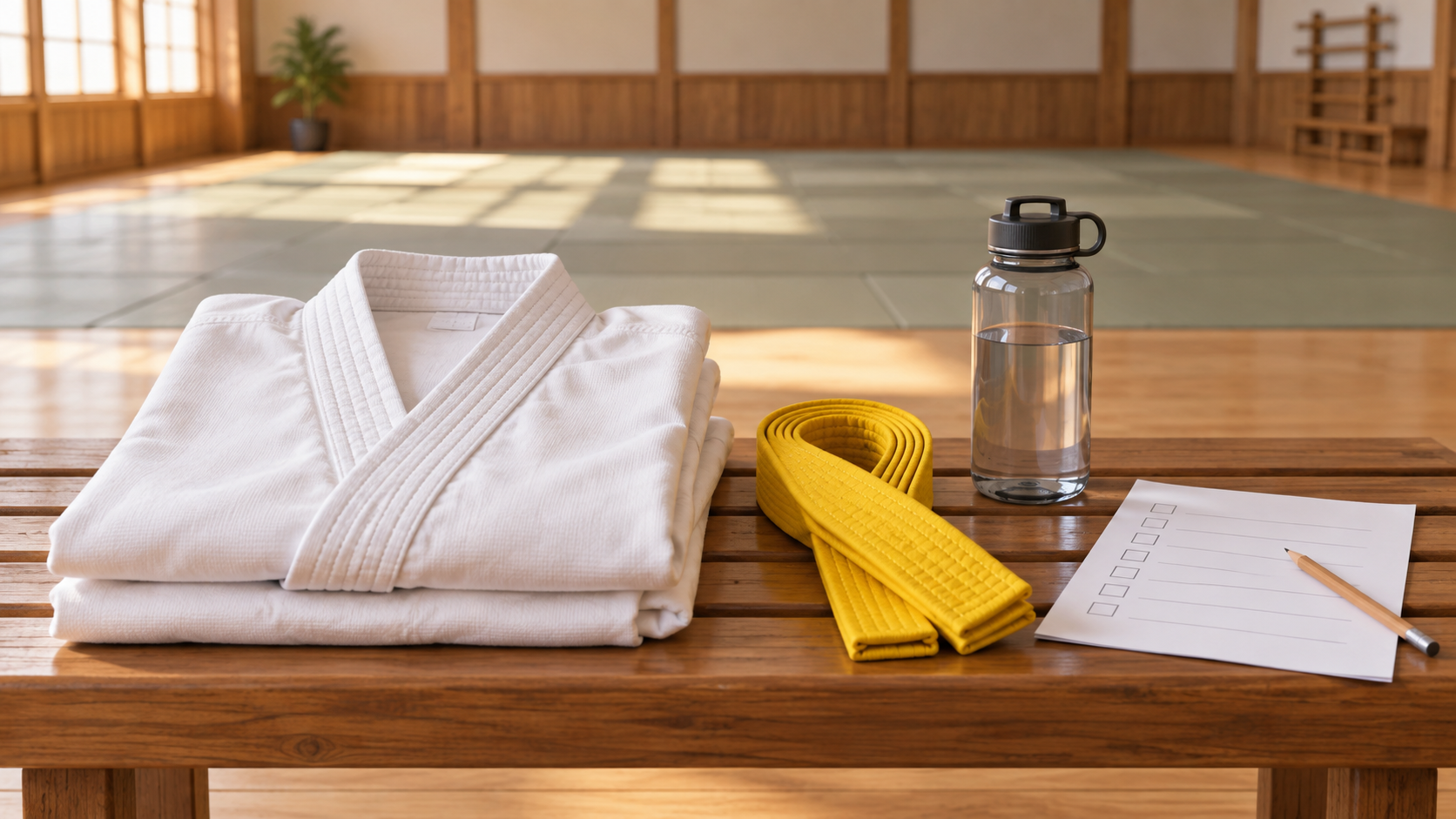
Check the club’s expectations before the day. In most dojos this means a clean karate gi, the correct belt and trimmed fingernails and toenails. Remove jewellery if the instructor requires it. If the grading uses a licence or record book, pack it the night before. KUGB students, for example, must bring their current licence and record book for inspection.
Do not buy new equipment unless the instructor asks for it. A first grading should not turn into a shopping test, and unfamiliar protective equipment can distract a child who is already nervous.
Explain what nerves feel like
Children may know the techniques and still freeze when they have to perform in front of an examiner. Tell them that a shaky stomach or dry mouth is a normal stress response. Practise bowing in, listening for the command to begin, and trying again after a mistake. Avoid promising that they will pass. A more useful message is that they can show what they have practised and ask for help if they are unsure.
The Japanese terms used in class can feel unfamiliar. The KUGB glossary includes common commands such as rei, meaning bow, yoi, meaning ready, and hajime, meaning start. Your child does not need to memorise every word at home, but recognising the commands used by their own instructor can make the assessment feel less strange.
On the day
Give your child a familiar meal, water and enough time to arrive without rushing. Keep your role simple. Help with the belt, then let the instructor lead. Parents should not call out corrections from the side of the room unless the club specifically invites it.
If your child forgets a sequence, they can pause, listen and continue when prompted. A grading is an assessment, not a performance for the parent. Praise concentration, courtesy and effort afterwards, regardless of the result.
A short parent checklist
- Ask the instructor for the exact syllabus and date.
- Confirm whether a licence, record book or grading fee is needed.
- Check the gi, belt and fingernails the night before.
- Pack water and arrive early enough to settle.
- Tell the instructor about pain, injury or a physical restriction.
- Agree on one calm sentence your child can remember, such as “Listen, breathe, try.”
When to check the organiser or instructor
Ask before grading if you are unsure about eligibility, minimum training time, belt colours, medical restrictions, contact during kumite, fees, or what happens after a failed assessment. Do not rely on an online syllabus from another organisation. It may use different standards, and the child’s own instructor is responsible for deciding whether they are ready.
Sources
Last checked: 19 September 2026.