Knowledge Share
What to expect at a child’s first karate class
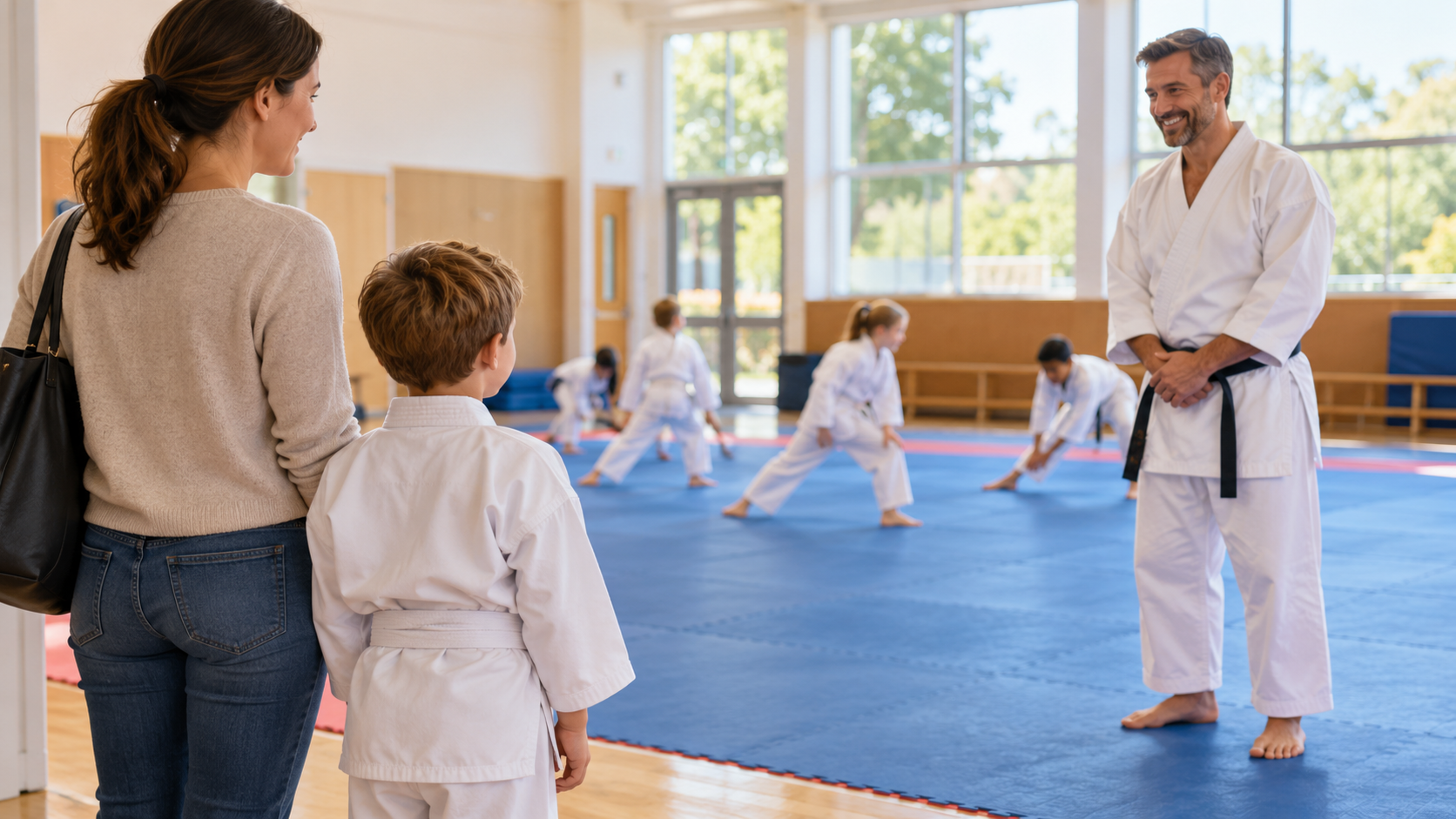
This guide is for parents and carers taking a child to a first karate class. Every club has its own arrangements, so use this as a conversation starter rather than a promise about what any particular session will look like.
Quick answer
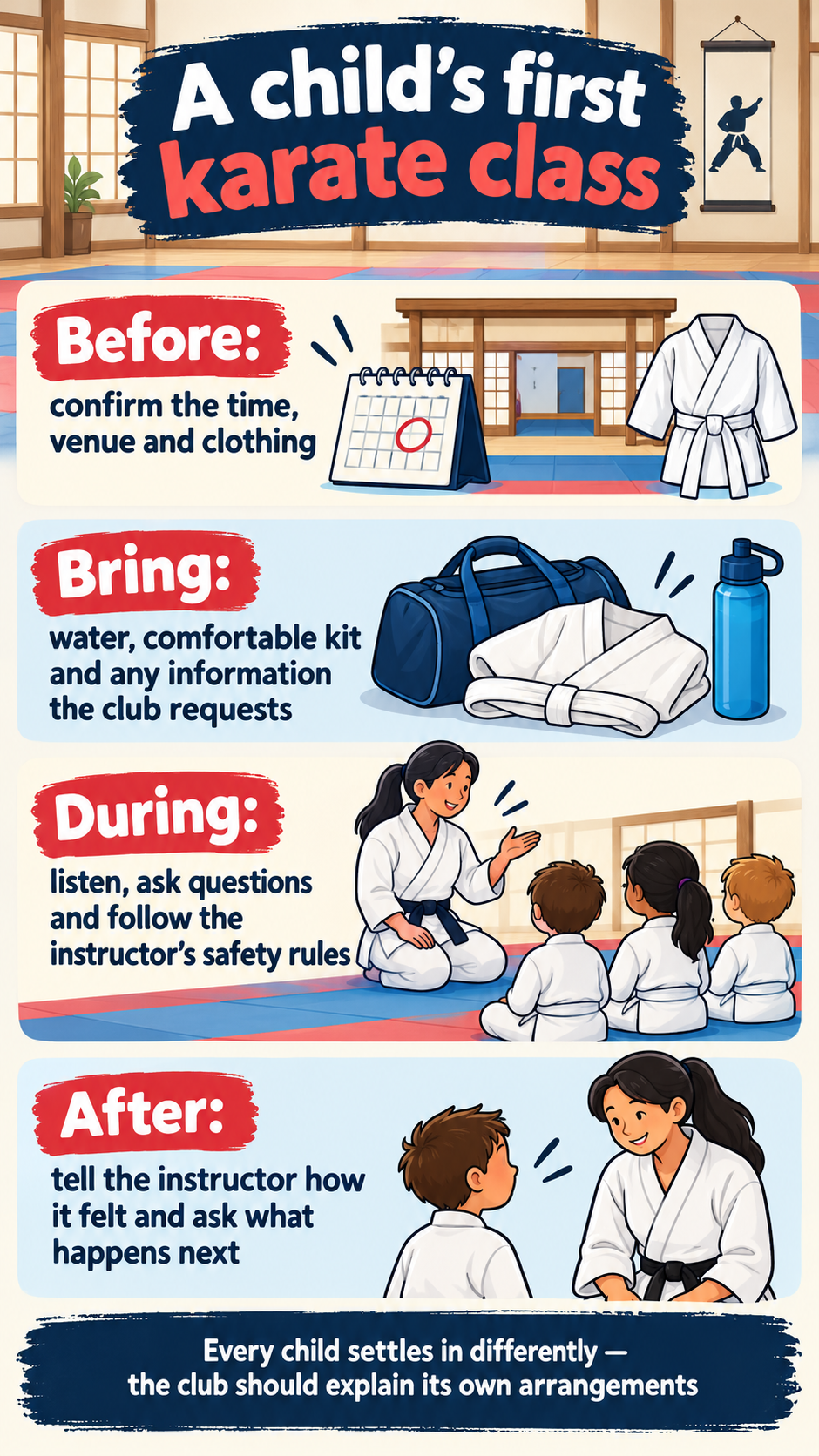
Before the class, confirm the time, venue, clothing and anything the club wants you to bring. Arrive with enough time to ask questions. During the session, the child can listen, try the activities at their own pace and follow the instructor’s safety rules. Afterwards, ask how it felt and what happens next.
Before you leave home
Check the club’s message for arrival instructions, parking, changing facilities, parent viewing and trial arrangements. Comfortable clothing may be acceptable for an introductory session, but follow the club’s instructions. Tie back long hair, remove jewellery if requested and pack water.
Arriving at the venue
Introduce yourself and your child to the instructor or named contact. Share information the club has requested, including accessibility or communication needs. Ask where shoes and belongings go, whether a parent stays nearby and how the child should ask for help.
What the class may involve
A beginner session may include a greeting, warm-up, basic movement, simple techniques, games, partner activities or an explanation of dojo etiquette. The exact balance depends on the instructor, age group, style and venue. A first class is an introduction, not a test of whether a child already knows karate.
Help your child participate safely
Encourage the child to listen, tell the instructor if something hurts or feels uncomfortable and stop when the instructor says to stop. Do not coach from the sidelines unless the club asks you to. The instructor should explain the session’s safety rules and how children can ask questions.
Every child settles in differently
Some children join in immediately; others watch first, need a quieter explanation or benefit from a gradual introduction. The EKF’s inclusion guidance emphasises asking what helps each person take part, because people with similar needs may still need different support. Tell the club what helps your child and ask what adjustments are practical.
After the class
Ask the child what they enjoyed, what felt difficult and whether they want to ask anything. Ask the instructor what happens next, whether another trial is appropriate and what clothing or membership arrangements apply. Give the child time to decide how the experience felt.
First-class checklist
- Confirm the time, venue, clothing and trial arrangements.
- Bring water, comfortable kit and any information the club requests.
- Arrive early enough to meet the instructor and ask practical questions.
- Follow the club’s safety and etiquette instructions.
- Tell the instructor about support needs, pain or discomfort.
- Ask what happens next before leaving.
When to check with the instructor
Ask before the session if you are unsure about clothing, food or drink, medication storage, accessibility, physical contact, parent viewing or what to do if a child becomes distressed. For health or injury concerns, seek appropriate professional advice; this guide does not diagnose or treat medical conditions.
Sources
English Karate Federation clubs and coaches — https://www.englishkaratefederation.com/clubs-and-coaches
English Karate Federation disability and accessibility — https://www.englishkaratefederation.com/inclusivity/disability-and-accessibility
British Combat Karate Association FAQs — https://www.britishcombatkarate.co.uk/karate/547/faqs
Last checked: 27 October 2026. The club’s current instructions and safety arrangements take priority.