Knowledge Share
What to wear and bring to your first karate class
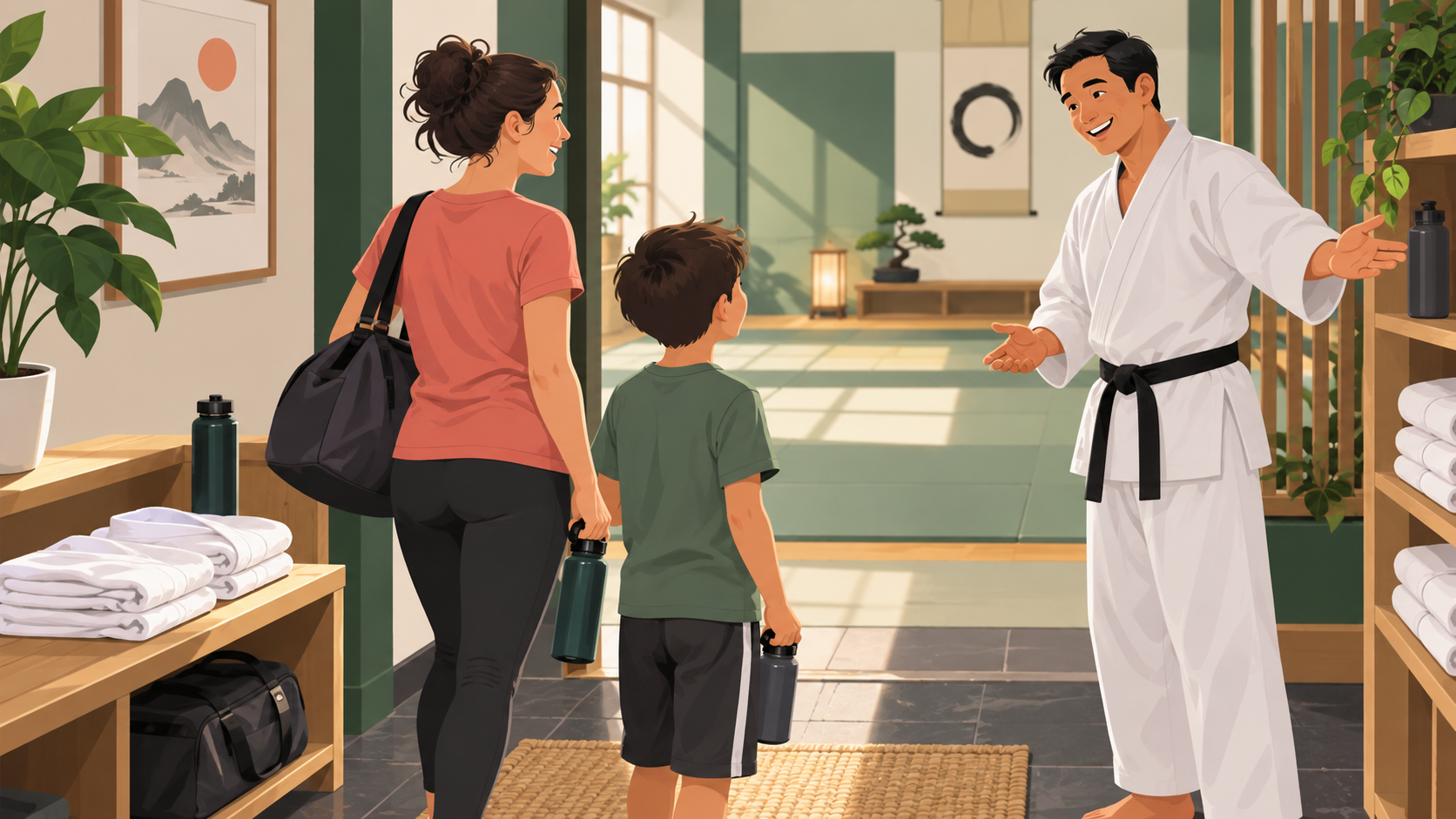
Audience: UK adult beginners and parents bringing a child to karate.
Quick answer
For a first karate class, wear clean, comfortable sports clothing that lets you move freely. Many UK clubs say beginners do not need to buy a karate suit, or gi, before trying a session. Training is usually barefoot, but the club may have its own instructions for entering the building or using the training hall.
Bring water, arrive with enough time to introduce yourself, and tell the instructor about any relevant injury, health concern or support need. The exact clothing, belt and equipment rules belong to the club or organisation running the class.
What to wear
A T-shirt with tracksuit bottoms, shorts or leggings is a practical starting point. Choose clothing that does not restrict movement and does not have loose parts that could catch during drills. A gi is normally introduced after a beginner has decided to continue, but some clubs may lend one, provide one, or ask for a particular uniform from the beginning.
Do not buy an expensive uniform before asking the instructor what style, cut, badge and belt the club uses. A club’s association or grading system may affect what is acceptable, and a uniform that is fine in one dojo may not meet another club’s requirements.
Footwear and the training space
Many karate classes train barefoot on a matted or sports-hall floor. Wear easy-to-remove shoes for travelling to and from the venue, and follow the instructor’s directions about where footwear is left. Do not assume that outdoor shoes, socks or indoor trainers are allowed on the training surface.
If the class is held in a shared sports centre, the venue may have additional rules. Ask where parents or visitors should wait, whether the changing rooms are available, and whether the class uses a different entrance from the main reception.
What to leave at home or remove
Remove watches, rings, necklaces and other jewellery before training whenever possible. Keep fingernails and toenails short, and tie back long hair so it does not obstruct vision or become a distraction. These are common safety expectations, but ask the instructor if an item cannot be removed for medical, cultural or religious reasons.
Do not bring protective equipment, sparring gloves or a belt unless the club has told you that you need them. Beginners should not have to guess which equipment is approved or required for their class.
What to bring
- A bottle of water
- Comfortable sports clothing
- Any medication or relevant information the instructor needs to know about
- A phone for emergency contact, kept away from the training area
- A notebook only if the instructor recommends recording exercises or club information
For children, agree who is collecting them and tell the instructor about any collection or supervision arrangement. Ask whether the club has a named welfare contact and where parents can read its safeguarding information.
Before you buy a gi
Ask the club whether a gi is required for trial sessions, when beginners usually purchase one, and whether the club supplies or recommends a particular retailer. Confirm whether the first uniform should be plain white and whether an association badge is required. The belt may be supplied with the gi, but the club should explain which belt a new student should wear.
A first-class checklist
- Contact the club and confirm the time, venue entrance, age group and clothing rules.
- Wear clean, comfortable clothes and bring water.
- Remove jewellery and keep nails short.
- Arrive early enough to introduce yourself and ask questions.
- Tell the instructor about relevant injuries, health concerns or support needs.
- Ask what happens after the trial and when a gi or licence becomes necessary.
When to check with the instructor or a professional
Training and equipment rules vary by style, association, venue and class. Ask the instructor before taking part if you are unsure about clothing, footwear, protective equipment, an injury or a child’s support needs. If you have a medical concern, seek advice from an appropriate healthcare professional. This guide is general information, not medical advice or an endorsement of a particular club.
Sources
- Kojin-Kai Karate Club: frequently asked questions
- Shotokan Karate Ryu: FAQ
- Cambridge Karate Club: beginners’ information
- RSKC: frequently asked questions
Last checked: 24 September 2026.