Knowledge Share
Between gradings: a simple weekly karate practice plan
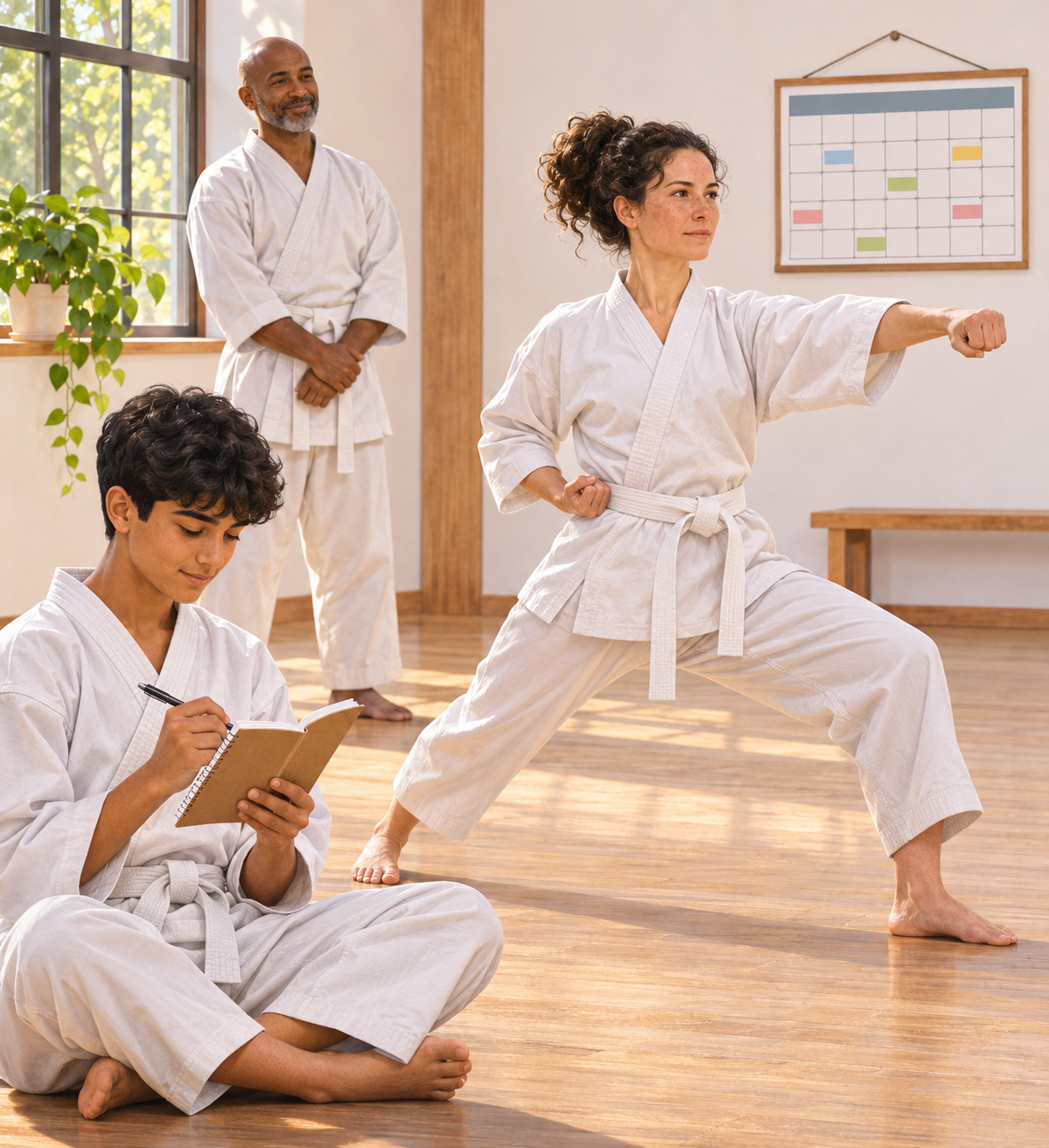
This guide is for UK karate beginners, parents and returning students who want a calm way to practise between gradings. It is a general planning aid, not a replacement for your instructor’s syllabus or an organisation’s current rules.
Quick answer
Use three short practice blocks across the week: basics and stance, kata and transitions, then review and questions. Keep a simple log, prioritise careful repetition and ask your instructor which material applies to your next assessment. Exact grading requirements, eligibility, intervals, fees and reasonable adjustments vary by association.
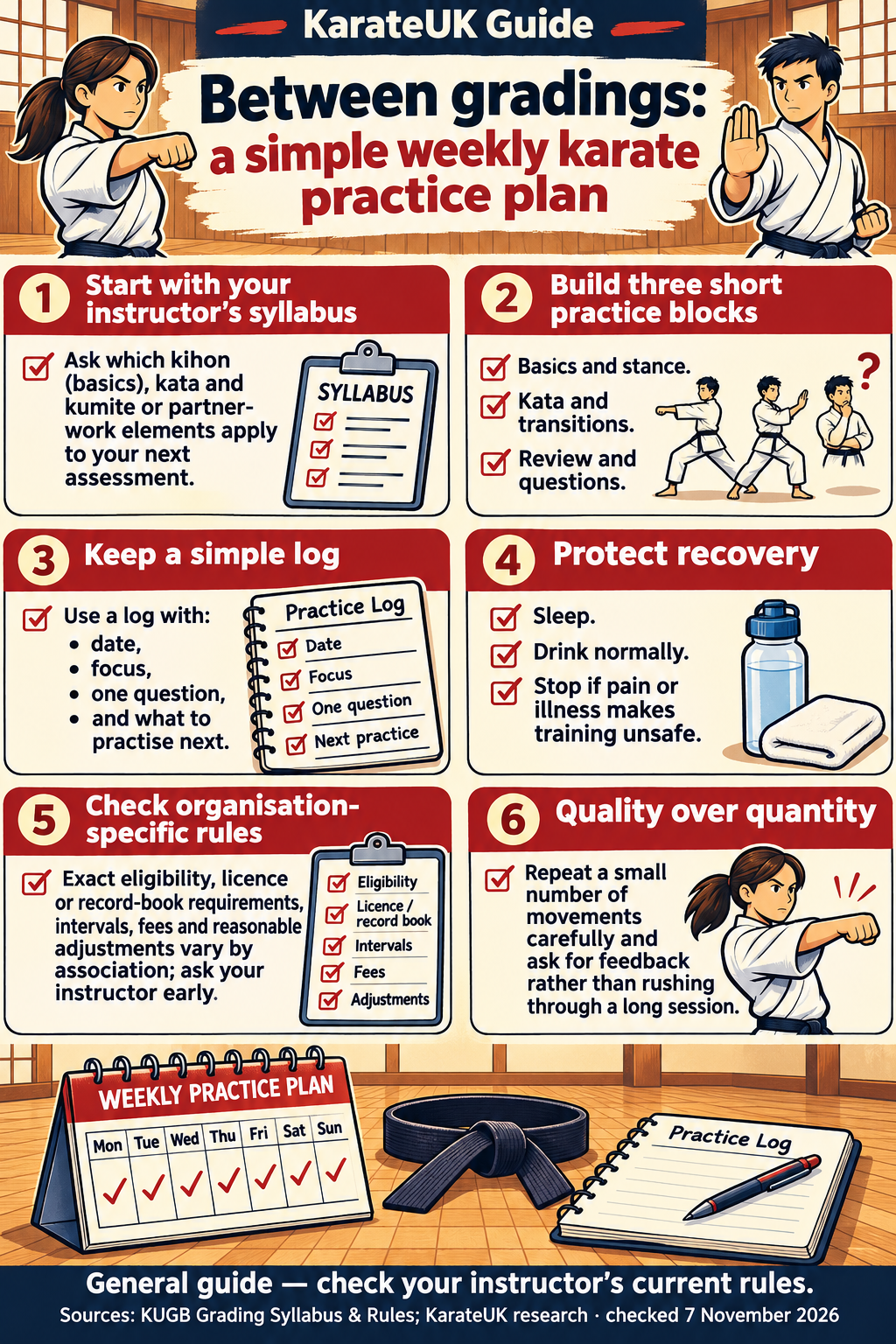
1. Start with your instructor’s syllabus
Before you build a routine, ask what your club is currently teaching for your next grade. Depending on the organisation, that may include kihon (basics), kata, kumite or partner work, etiquette and technical details. The KUGB publishes its own syllabus and rules, but its requirements are not a universal UK syllabus.
2. Build three short practice blocks
A repeatable plan is easier to sustain than one long session. Keep the effort appropriate to your experience and the space available.
- Block A — basics and stance: practise the small set your instructor has assigned, with attention to posture, balance and returning to a stable position.
- Block B — kata and transitions: walk through the sequence slowly, then repeat the sections where direction or footwork needs more attention.
- Block C — review and questions: note what felt unclear and bring one or two specific questions to the next class.
3. Keep a simple practice log
A notebook or phone note can record the date, the focus, one question and what to practise next. The purpose is not to score yourself; it is to help you remember your instructor’s feedback and notice which small details need revisiting.
4. Protect recovery and training safety
Leave room for ordinary rest and recovery. Drink normally, sleep as well as you can and stop if pain or illness makes training unsafe. Tell your instructor about an injury, health concern or support need before taking part, and ask what adjustments are appropriate. This guide is not medical advice.
5. Check organisation-specific rules early
Some organisations specify technical requirements, licences, record books, minimum intervals, attendance expectations or advance notice for reasonable adjustments. The KUGB says its own karateka need the relevant technical requirements, a current licence and record book, and permission from the senior club instructor. Treat that as KUGB-specific information and ask your own instructor what applies to you.
6. Choose quality over quantity
Repeat a small number of movements carefully, then seek feedback. Rushing through a long list can make it harder to notice balance, timing or posture. Your instructor’s correction is more useful than trying to copy a new technique from an unverified online clip.
Practical checklist
- Ask your instructor what kihon, kata and kumite or partner-work elements apply next.
- Schedule three short, focused practice blocks rather than cramming.
- Log the date, focus, one question and your next practice target.
- Check current rules, fees, intervals, licence or record-book requirements with the organiser.
- Stop for pain or illness and tell your instructor about concerns before training.
When to check with the instructor
Ask before practising if you are unsure about the syllabus, contact work, equipment, space, grading date, fees, attendance, licences or adjustments. Your club, association and examiner’s current instructions take priority over this general guide.
Sources
Karate Union of Great Britain — Grading Syllabus & Rules: https://kugb.org/rules-policies/grading-syllabus-rules/
Karate Union of Great Britain — About us: https://kugb.org/about-us/
Last checked: 7 November 2026. This is general educational guidance; exact rules vary by karate organisation and club.