Knowledge Share
How to make karate training more accessible
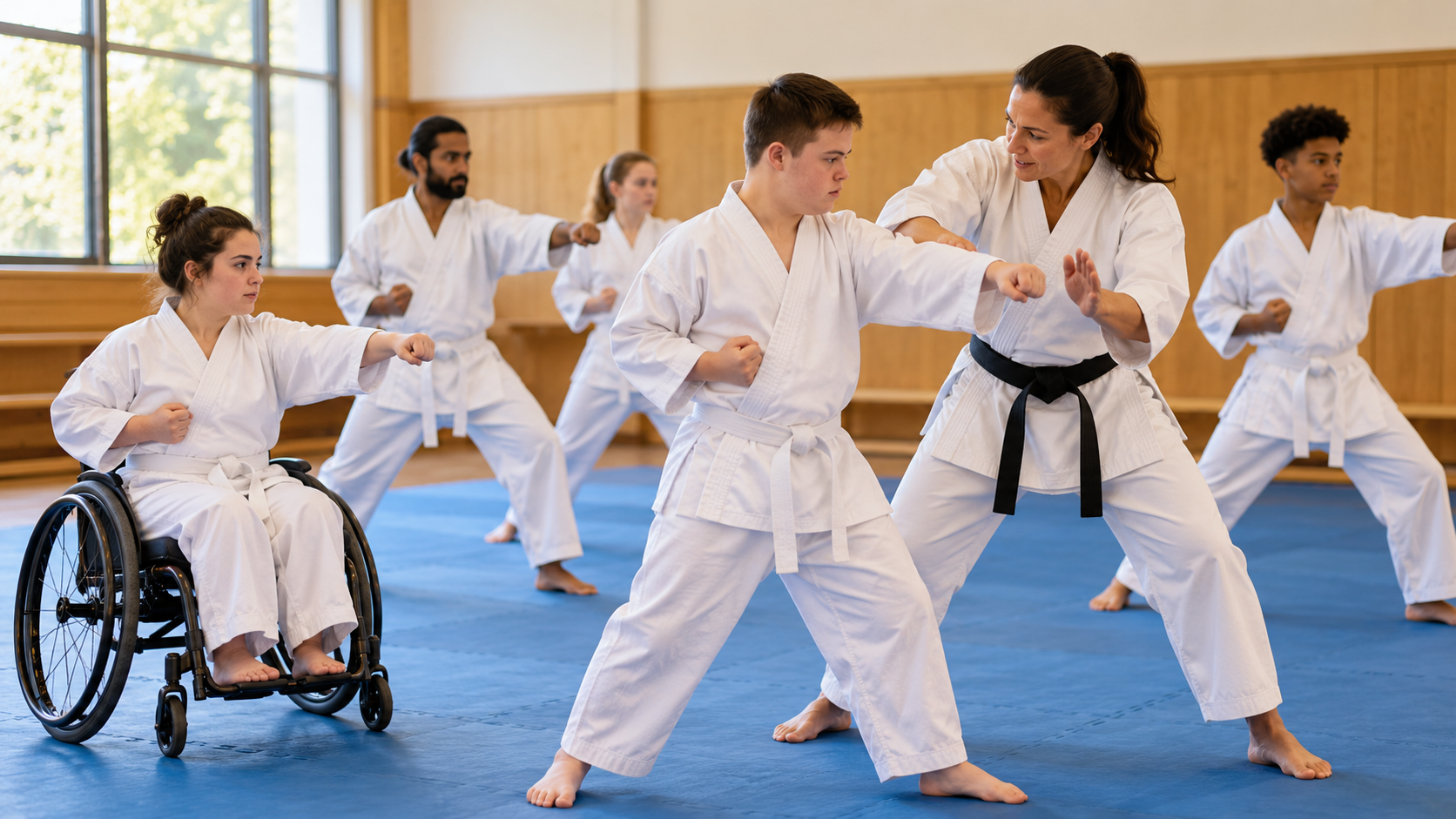
This guide is for karate clubs, instructors, parents and participants who want to make training more accessible. It offers practical questions and ideas, not a universal standard: people’s needs differ, and a club should discuss what is workable for the individual and the venue.
Quick answer
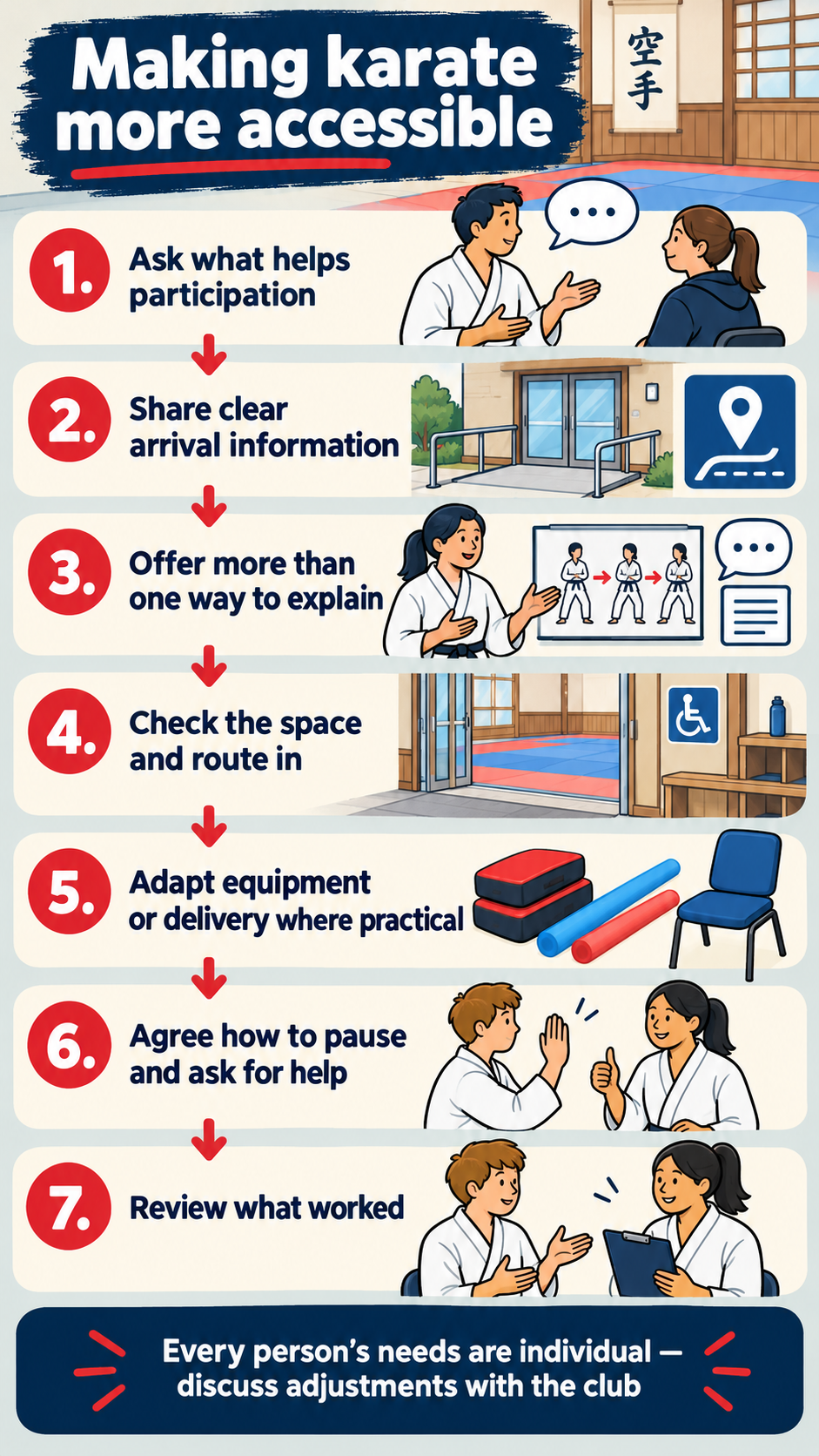
Start by asking what helps the person take part. Share clear information before arrival, offer more than one way to explain an activity, check the route and training space, agree how to pause or ask for help, and review what worked after the session.
Ask what helps participation
Do not assume that a diagnosis, impairment or previous experience tells you exactly what someone needs. Ask the participant or parent what helps them understand instructions, move around the venue, communicate, manage breaks and feel comfortable joining in.
Share clear information before arrival
Explain the class time, entrance, parking or public transport information, changing arrangements, viewing expectations, clothing, equipment, physical-contact activities and who to speak to on arrival. Clear information can reduce uncertainty before a first visit.
Offer more than one way to explain
A spoken explanation may work well for one person and a demonstration, written sequence, visual cue or extra processing time may work better for another. Ask what format is useful and check understanding without putting someone on the spot.
Check the space and route in
Consider the entrance, doors, toilets, changing area, viewing area, mat edge, lighting, sound and places to rest. A venue may be usable for one participant but still need a practical adjustment for another. Discuss the route with the participant rather than relying only on a checklist.
Adapt equipment or delivery where practical
Depending on the activity and the person, an instructor may be able to change a drill, use a different target or prop, adjust pace, offer a rest break, provide a clearer demonstration or use a different position in the class. Any change should preserve safety and be agreed with the instructor and participant.
Agree how to pause and ask for help
Before training, agree a simple way to pause, ask for clarification or signal that an activity needs changing. Make sure the participant knows who to approach. Instructors should explain the class safety rules and respond respectfully when someone raises a concern.
Review what worked
After a session, ask what helped, what created a barrier and what should change next time. Record only the information the club genuinely needs, handle it respectfully and follow the club’s safeguarding and data-protection arrangements.
Practical checklist
- Ask the participant what helps them take part.
- Send clear arrival and class information in an accessible format where possible.
- Offer spoken, written, visual or demonstrated explanations as appropriate.
- Check the route, space, toilets, changing arrangements and rest options.
- Agree safe adaptations, pauses and ways to ask for help.
- Review the session with the participant and update the plan when needed.
Limitations and safety
Not every adjustment is suitable for every activity, venue or person. Instructors should stay within their competence, follow the club’s safeguarding arrangements and seek appropriate specialist advice when needed. This guide is not medical, legal or safeguarding casework advice.
When to check with the instructor or organiser
Ask before joining, changing an activity, attending a grading or entering a competition if you are unsure about supervision, physical contact, equipment, venue access, communication, rest breaks or reporting a concern. The club’s current arrangements and the event organiser’s rules take priority.
Sources
English Karate Federation — Safeguarding: https://www.englishkaratefederation.com/safeguarding
English Karate Federation — Clubs and coaches: https://www.englishkaratefederation.com/clubs-and-coaches
English Karate Federation — Disability and accessibility: https://www.englishkaratefederation.com/inclusivity/disability-and-accessibility
English Karate Federation — Sensory impairments: https://www.englishkaratefederation.com/inclusivity/sensory-impairments-in-karate
Last checked: 1 November 2026. Club, association and venue arrangements vary; confirm current details directly with the club.