Knowledge Share
A safer karate warm-up and cool-down: a practical guide
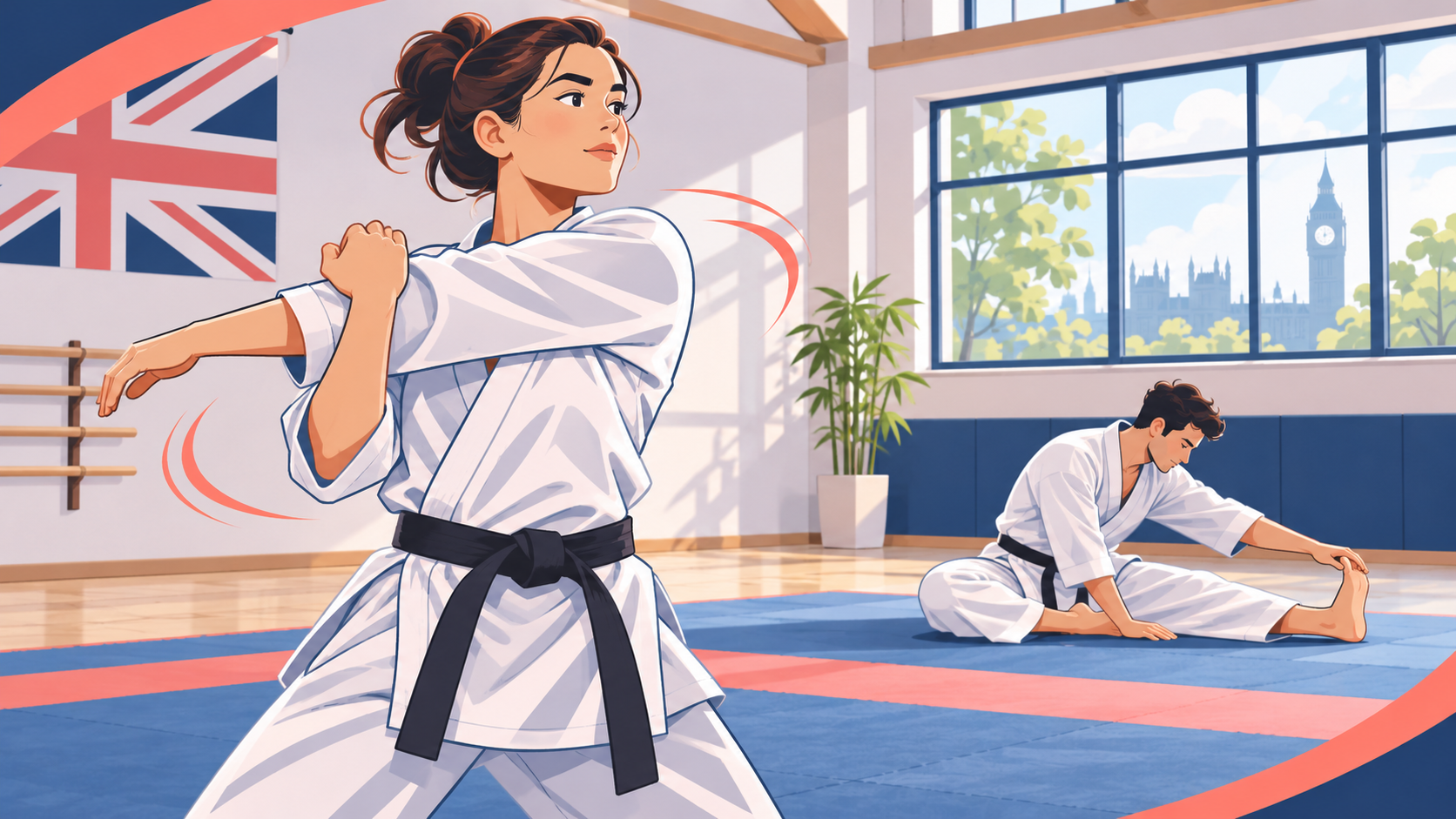
This practical guide is for adult beginners, parents and recreational karateka who want a simple way to structure the start and end of a normal training session. It combines general NHS exercise advice with karate-specific examples, but your instructor’s session plan should always take priority.
Quick answer
Start with easy movement, mobilise the joints you will use, then build gradually into light karate-specific work. At the end, reduce the pace rather than stopping suddenly, and add gentle stretches once you are moving easily. Warm-ups and cool-downs should feel controlled, not like a second hard workout.
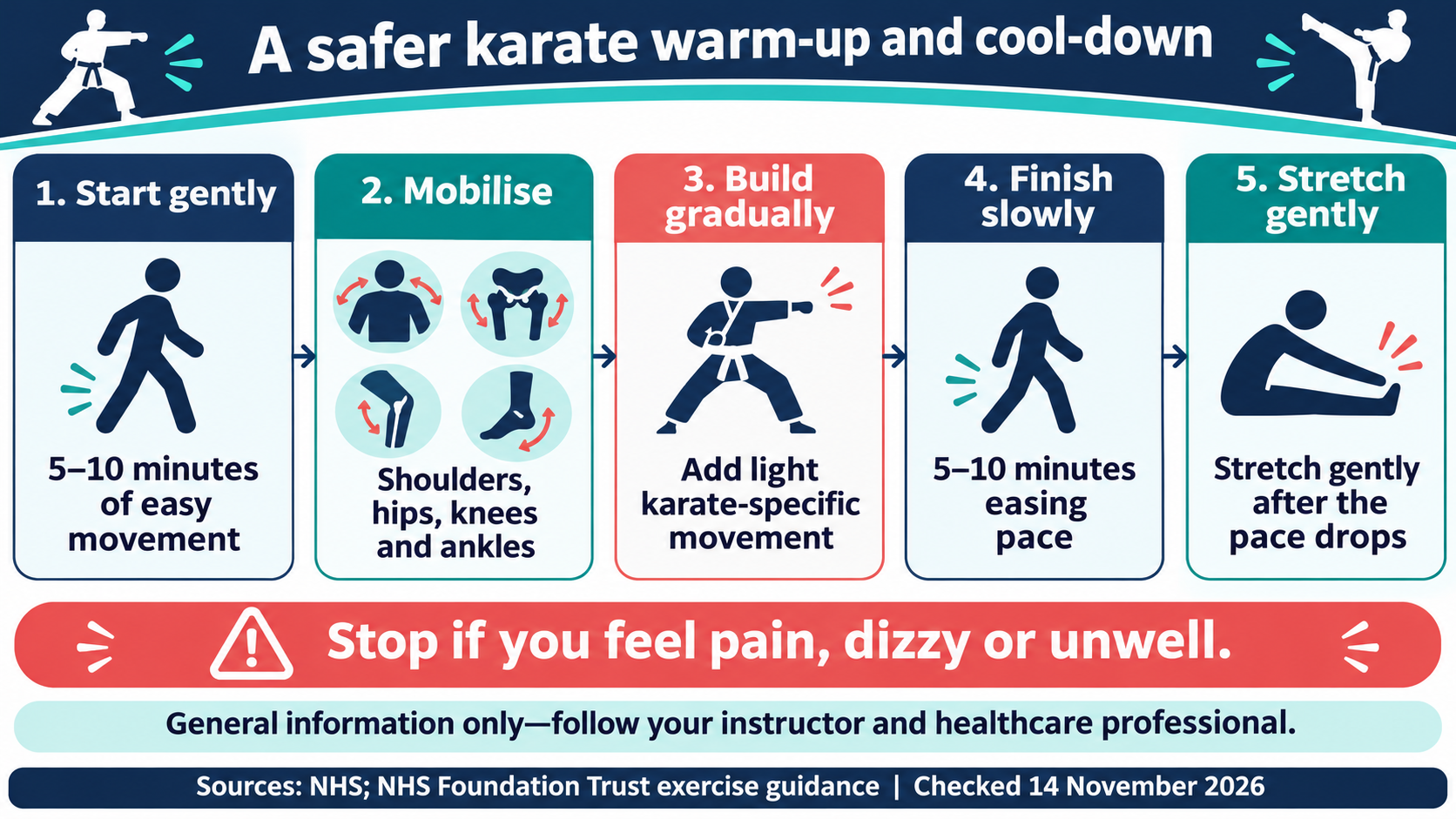
1. Start gently
Use around five to ten minutes of easy movement to raise your temperature and breathing gradually. Marching, relaxed walking around the dojo, light footwork or gentle whole-body movement can work. NHS exercise guidance recommends building intensity progressively rather than starting at full effort.
2. Mobilise the areas karate uses
Move the shoulders, hips, knees and ankles through comfortable ranges. Try shoulder rolls, easy arm swings, controlled hip circles, gentle knee bends and ankle movements. Keep the motion smooth and avoid forcing a joint to its end range.
3. Add light karate-specific movement
Once you feel warmer, add low-intensity versions of movements that may appear in class: relaxed stance changes, controlled steps, easy punches to the air, gentle blocks or slow technique combinations. Keep the power and speed below training intensity and follow the instructor’s chosen sequence.
4. Finish by easing the pace
After training, spend roughly five to ten minutes reducing the intensity. Walk, breathe steadily and let your pace come down gradually. NHS guidance advises a gradual cool-down instead of stopping suddenly, particularly after more vigorous exercise.
5. Stretch gently after the pace drops
When you are no longer working hard, use gentle stretches for the muscles you have trained. Keep breathing normally and stay within a comfortable range. Stretching should not be painful or forced.
Stop signs and safety limits
Stop if you feel pain, dizziness, unusual breathlessness, chest discomfort, nausea or generally unwell. NHS guidance says people with an injury, health condition, recent operation or other concern should seek appropriate professional advice before trying new exercise. This guide is general information, not diagnosis or treatment.
A simple checklist
Before class: clear the space, wear clothing that lets you move, drink normally and tell the instructor about any relevant limitation. During the warm-up: start easy, mobilise gradually and avoid sudden maximal kicks or stretches. After class: lower the pace, stretch gently if comfortable and note anything that needs discussing before your next session.
When to check the instructor or a healthcare professional
Ask the instructor to adapt the warm-up if you are returning after time away, managing a known injury or unsure which movements are suitable. Seek healthcare advice before exercising if you have a health problem, recent surgery, persistent pain or symptoms that concern you. Follow medical advice over any general online guide.
Sources
NHS — Cool-down video: https://www.nhs.uk/live-well/exercise/strength-and-resistance/body-blast-cool-down/
South Tyneside and Sunderland NHS Foundation Trust — Physical activity: https://stsft.nhs.uk/patients-and-visitors/advice-and-support/cancer-information-hub/prehabilitation/physical-activity
Last checked: 14 November 2026. General exercise advice and class requirements can vary; follow your instructor and healthcare professional.